
Start a Strategy Conversation
MenuStart a Strategy Conversation

The Captivate Framework

The brief never leaves the building.


Strategy, live capture and production under one accountable team. We keep the argument intact from the first question to the finished work.

  • Clarify
  • Capture
  • Craft
  • Amplify

Start a Strategy ConversationSee how the method works

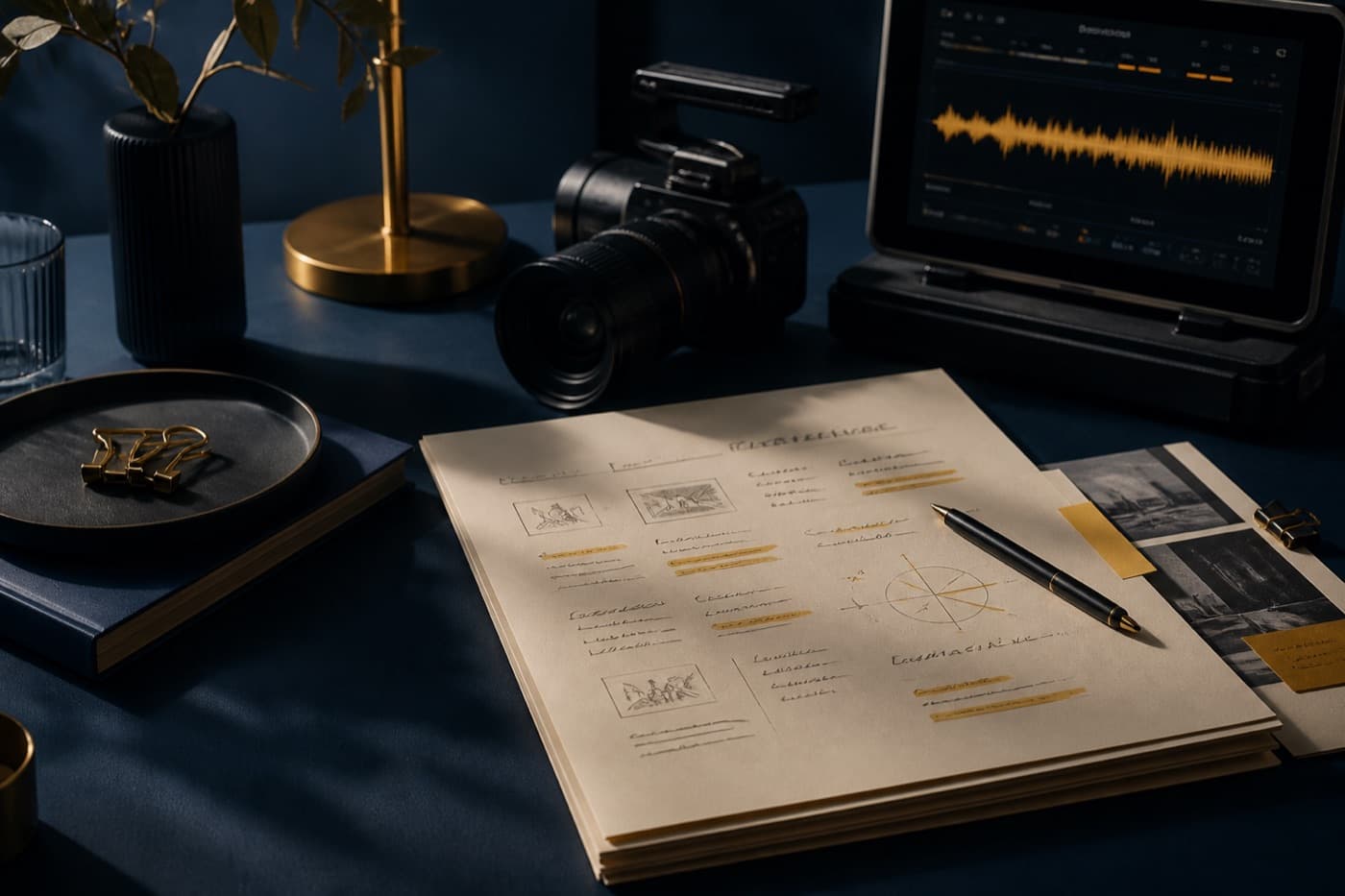
Abstract editorial composition with a camera lens, lighting and an audio waveform
Strategy in the room. Production in the frame.

What we make

One system. Four visible outputs.

Each output is a different expression of the same argument, carried from the first question through distribution. The visual marks are system cues, not client work.

Scroll horizontally to see all four outputs.

  1. 01StrategyClarifyA written positioning and message architecture
  2. 02Live captureCaptureLive event, executive interview and panel capture
  3. 03Editorial productionCraftFilms, podcast episodes and edited interview series
  4. 04DistributionAmplifyChannel sequencing and a distribution calendar

You approved a strategy. You received a video.

Somewhere between the deck and the delivery, the argument got thinner. Not because anyone did bad work — because the people who found the insight were not in the room when it was captured, and the people who captured it were working from a brief instead of a conviction. Nobody owns the seam, so nobody is accountable for what is lost across it.

We built the Captivate Framework to close that gap on purpose.

The Captivate Framework

Four stages, run by one team, in this order: Clarify → Capture → Craft → Amplify. The stage most agencies skip is the second one — and it is the reason the other three hold.

Selected stage: Clarify. Decide what you are actually saying, and to whom, before anything is produced.

Stage 01 / 04

Clarify

Decide what you are actually saying, and to whom, before anything is produced.

Clarify is research and argument. We work out what you know that your market does not, who specifically needs to hear it, and what claim you are prepared to defend in front of an analyst. The output is a written position, not a mood board. Everything downstream is built to serve it, and we do not move on until you can say the argument back in one sentence.

You get

  • A written positioning and message architecture
  • Named audience segments and the questions each one is actually asking
  • The editorial argument every asset will ladder up to

The seam this guardsProduction briefs that describe a deliverable but never state a point of view.

Open the full framework

Read the full method

Four ways in. One system underneath.

These are entry points, not departments. Whichever one you start with, the same team runs Clarify → Capture → Craft → Amplify behind it.

  • Entry point 01 / Clarify

    Message and positioning

    What moves forwardA written positioning and message architecture

    Why teams start here

    Work out what you know that your market does not, and write the argument everything else has to serve.

  • Entry point 02 / Capture

    Video and podcast production

    What moves forwardLive event, executive interview and panel capture

    Why teams start here

    Films, series and episodes built by the people who defined the argument, not handed to a crew that never heard it.

  • Entry point 03 / Craft

    Event and live capture

    What moves forwardFilms, podcast episodes and edited interview series

    Why teams start here

    Keynotes, panels and executive interviews captured with the editorial plan already written — so the footage is usable as content, not just as a record.

  • Entry point 04 / Amplify

    Authority content, ongoing

    What moves forwardChannel sequencing and a distribution calendar

    Why teams start here

    A standing programme that keeps producing and distributing, so your point of view compounds instead of resetting every quarter.

See how each one works

Judge the method before the case study

We publish client work only when the client has approved the name, the work and the result. That standard matters: an anonymous outcome you cannot check is not proof.

The fastest way to see how we work is to bring us a project like yours and inspect the method with us.

Start a Strategy ConversationWhat we can show you today

Illustrative workflow · not client work

See the system behind the work.

Client proof belongs to the client who cleared it. These visual markers are workflow illustrations: a production system built to carry the idea through, not client artifacts or outcomes.

Stage 01 / illustrative workflow

Clarify

A written positioning and message architecture

Stage 02 / illustrative workflow

Capture

Live event, executive interview and panel capture

Stage 03 / illustrative workflow

Craft

Films, podcast episodes and edited interview series

Stage 04 / illustrative workflow

Amplify

Channel sequencing and a distribution calendar

Read the proof standard

The Captivate Framework came out of a specific frustration.

Dana Reeves founded Reeves Media Group after watching the same failure repeat from both sides of it: strong strategy that arrived at production stripped of its argument, and strong production built on a brief nobody could defend. The method exists to make that handoff impossible — by removing it.

More about Dana Reeves

Project, programme, or a conversation first.

  • A defined project

    One argument, captured and produced end to end. Good when you have a moment on the calendar — an event, a launch, an executive who finally has an hour.

  • An ongoing programme

    A standing team running Clarify → Capture → Craft → Amplify on a recurring cycle, so authority accumulates instead of resetting.

  • A strategy call

    Thirty minutes on what you are trying to say and whether we are the right team to help you say it. No deck, no pitch.

Start with a conversation

What we are arguing about lately

We publish the same way we produce: a position first, then the evidence.

Editorial themes · no published articles yet

  • A

    The handoff seam

    What breaks when strategy and production are two different companies — and how to scope, brief and buy so it does not.

    Theme outline
  • B

    Live capture and its editorial afterlife

    Events and live moments are content sources, not content deliverables. What has to be true at capture time for anything to be reusable afterwards.

    Theme outline
  • C

    Executive and analyst expertise, produced

    How to extract a real point of view from senior people who have no time, and turn it into work that carries their name credibly.

    Theme outline

All insights

Tell us what you are trying to say.

Bring the messy version. Half the value of the first call is watching a vague ambition turn into a sentence you can defend — that is Clarify, and it starts before you hire anyone.

Tell us what you are trying to say